
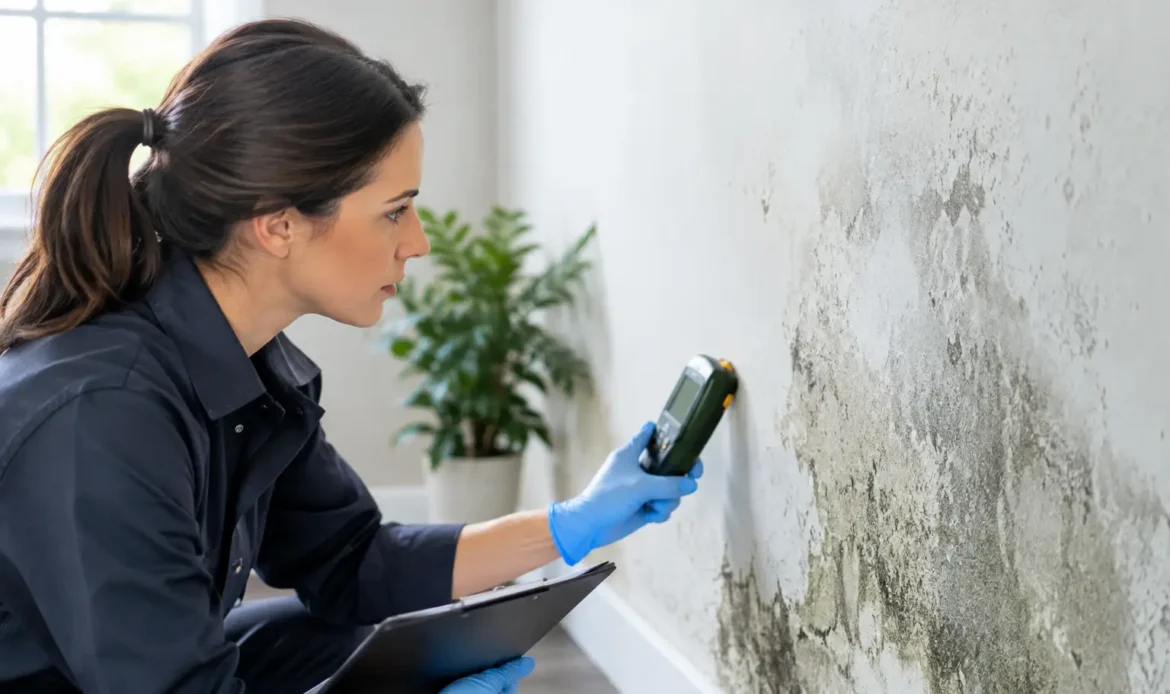
A wall can look clean while moisture and mold growth continue behind the paint, drywall, baseboard, or insulation. Knowing how to test mold walls helps you respond before a small plumbing leak, roof issue, or past flood becomes a larger health and property problem. The goal is not simply to find a dark spot. It is to identify whether mold is present, where moisture is coming from, and whether the affected material needs professional remediation or repair.
Start With a Careful Visual and Odor Check
Begin by looking at the wall in natural light and checking nearby surfaces. Mold may appear as black, gray, green, brown, white, or orange spotting, but color alone cannot confirm mold type or severity. Look for peeling paint, bubbling drywall tape, warped baseboards, staining, soft drywall, or a visible line of discoloration near the floor or ceiling.
A persistent musty odor matters too. Mold can grow inside a wall cavity after a leak has dried on the surface, so an odor near one area may be the first sign of concealed moisture. Pay particular attention to walls next to bathrooms, kitchens, laundry rooms, water heaters, windows, exterior stucco, and HVAC equipment.
Do not scrape, sand, drill into, or aggressively clean a suspicious area just to investigate it. Disturbing moldy materials can release spores and contaminate other areas of the home or business. If the wall is visibly damp, soft, or actively leaking, limit access to the area and address the water source immediately.
How to Test Mold Walls With Moisture Detection
Mold needs moisture to grow. That makes moisture detection one of the most useful parts of wall testing, especially when damage is hidden. A moisture meter can compare readings from a suspected wall with readings from a known dry wall in the same property. Elevated readings may point to a leak or wet building material behind the surface.
Infrared thermal imaging can also help identify temperature differences that may be associated with wet insulation, plumbing leaks, or intrusion around windows and exterior walls. Thermal imaging does not directly identify mold. It shows conditions worth investigating further. A cold area, for example, may be caused by moisture, missing insulation, or air movement.
These tools are valuable because they help narrow the inspection without opening every wall. However, readings must be interpreted in context. Southern California homes can have temperature variations from sun exposure, air conditioning, plumbing lines, and construction materials. A moisture anomaly is a reason to investigate, not a laboratory confirmation of mold.
Check the Likely Moisture Source
Testing a wall without considering the source can lead to a temporary fix. Ask what happened before the staining or odor appeared. Common causes include a slow supply-line leak, failed shower waterproofing, a leaking roof, condensation from poor ventilation, irrigation against an exterior wall, or water entering around windows and doors.
If a water event occurred within the last 24 to 48 hours, drying the area promptly is often the most effective way to prevent mold growth. If the wall has remained damp, smells musty, or shows ongoing damage, testing and a targeted inspection become more urgent.
When Surface Samples Make Sense
A surface sample can help determine whether a suspicious mark on drywall, trim, or another material is mold growth. Inspectors may use tape-lift or swab sampling and submit the sample to a certified laboratory for analysis. This can be useful when a stain could be mold, dirt, soot, old water staining, or another material.
Surface sampling has limits. It only represents the exact area sampled, and it cannot tell you how much growth may be hidden behind the wall. If there is obvious widespread visible mold and clear moisture damage, the more pressing need is usually to stop the moisture, define the affected area, and plan proper removal. Testing is most helpful when the findings will guide a property decision, insurance documentation, remediation scope, tenant concern, or renovation plan.
Avoid relying on store-bought petri-dish kits for answers about a wall. Mold spores exist naturally in indoor and outdoor air, and a dish can grow colonies even in a healthy building. It does not identify the moisture source, the location of hidden growth, or whether wall materials are contaminated.
Air Testing Can Support a Larger Investigation
Air sampling may be appropriate when there is a mold odor, unexplained respiratory irritation, a history of water damage, or concern that a wall cavity is affecting indoor air. A professional inspection typically compares indoor samples with an outdoor control sample and evaluates the results alongside visual conditions, moisture findings, building history, and laboratory data.
Air testing is not a pass-or-fail test for every mold concern. Results can vary with weather, HVAC operation, open windows, cleaning activity, and whether mold is actively releasing spores at the time of sampling. A normal air result does not automatically rule out concealed growth inside a wall. Likewise, an elevated result should lead to source investigation rather than assumptions about one specific room.
For this reason, the strongest approach combines a detailed inspection with appropriate sampling. Bio Safe Air uses non-invasive moisture detection as part of its mold-testing service to help locate conditions that support hidden growth before recommending next steps.
Know When a Wall Needs Professional Inspection
A small, isolated spot caused by a minor surface issue may be manageable once the moisture source is fixed. But a professional mold inspection is the safer choice when you see repeated staining, damaged drywall, a strong musty odor, visible growth larger than a small localized area, or signs that water has entered wall cavities.
Professional help is especially valuable before buying or selling a property, beginning demolition, making an insurance claim, returning tenants to a unit after water damage, or reopening a commercial space. In these situations, clear documentation matters as much as the initial observation. A licensed inspector can document conditions, collect the right sample types when needed, identify probable moisture pathways, and provide laboratory-backed findings for repair or remediation decisions.
If anyone in the building has asthma, severe allergies, immune suppression, or unexplained symptoms that seem worse indoors, avoid treating the issue as a cosmetic wall stain. Mold can be one part of an indoor air quality concern, and exposure decisions should be made cautiously. A property inspection cannot diagnose a medical condition, but it can provide useful environmental information for safer next steps.
What to Do After You Find Mold or Moisture
First, stop the water. Repair the leak, roof entry point, plumbing issue, drainage problem, or ventilation failure that created the damp conditions. Cleaning or painting over mold without correcting moisture almost always leads to recurrence.
Next, avoid covering damaged materials with new paint, paneling, or drywall. Porous materials such as drywall, insulation, carpet backing, and particleboard may need removal if they have remained wet or show confirmed mold growth. Nonporous materials can sometimes be cleaned, but the right method depends on the extent of contamination and the material involved.
After remediation or repair, consider clearance testing when the project involves a significant affected area, sensitive occupants, a landlord-tenant concern, or a documented water-loss claim. Clearance testing can help confirm that visible debris has been removed, moisture conditions are controlled, and the work area is ready for normal use.
A Better Test Gives You a Better Repair Plan
The best way to test a suspicious wall is to treat mold as a moisture problem first and a sampling question second. Visual findings, odor, moisture readings, building history, and laboratory testing each provide part of the answer. Used together, they can prevent unnecessary demolition while reducing the risk of leaving hidden damage behind.
If a wall has changed color, feels damp, or carries a musty smell, act before the problem spreads beyond the room you can see. Timely inspection gives you practical evidence to protect the people in the building and make the right repair the first time.
